What Changes
When educators and leaders begin to reflect deeply on children's learning, small shifts appear in classrooms and anganwadis.
On Change
Change is complex.
Countless influences, seen and unseen, interact with what we do to produce the changes we see in the spaces we work in. They include individual attributes, community constraints, and financial, social and political environments.
We therefore hesitate to attribute the changes we see to the “impact” of our work. That feels too deterministic and presumptuous, given our understanding of our work.
What we can do is notice the changes and use them to educate ourselves about the relationship of our work with the communities we serve. That helps us think about how to better align ourselves to what is needed, how to build our capacities to deliver it, and how to form a view of whether our work is helping.
What We Notice
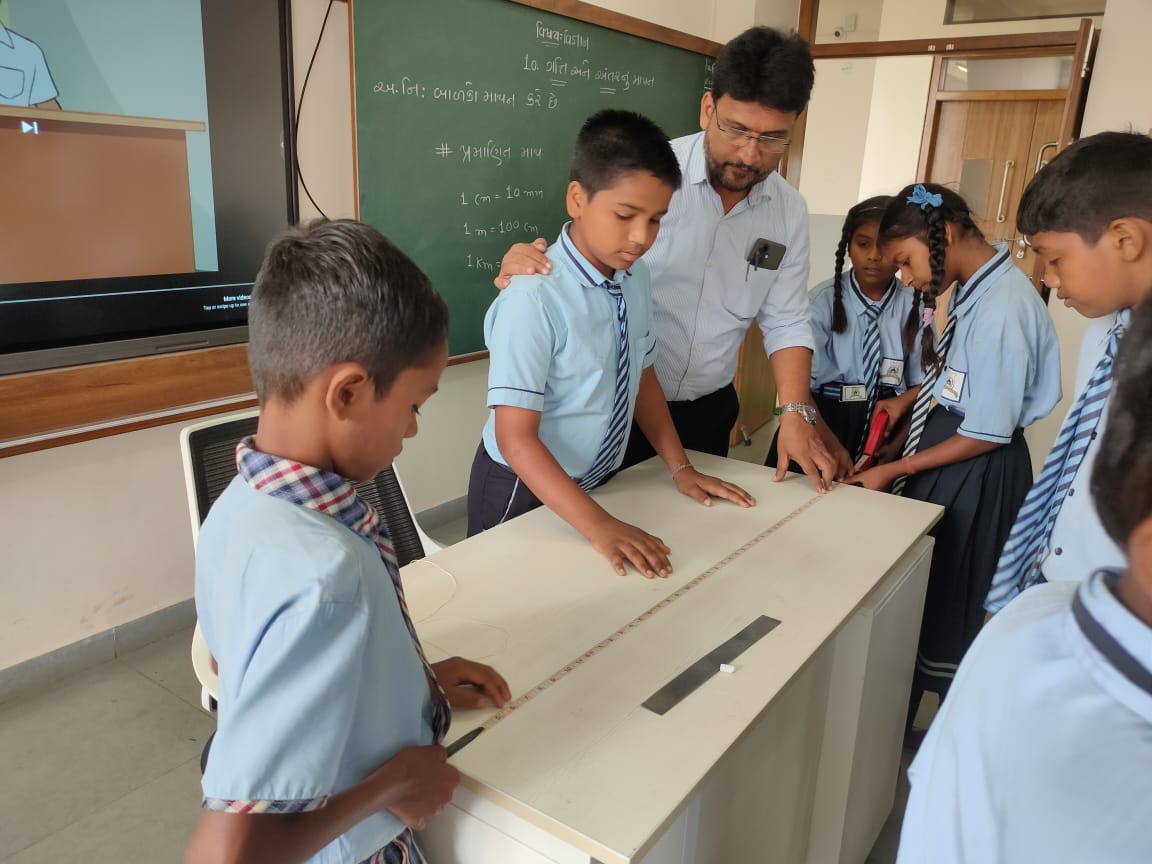
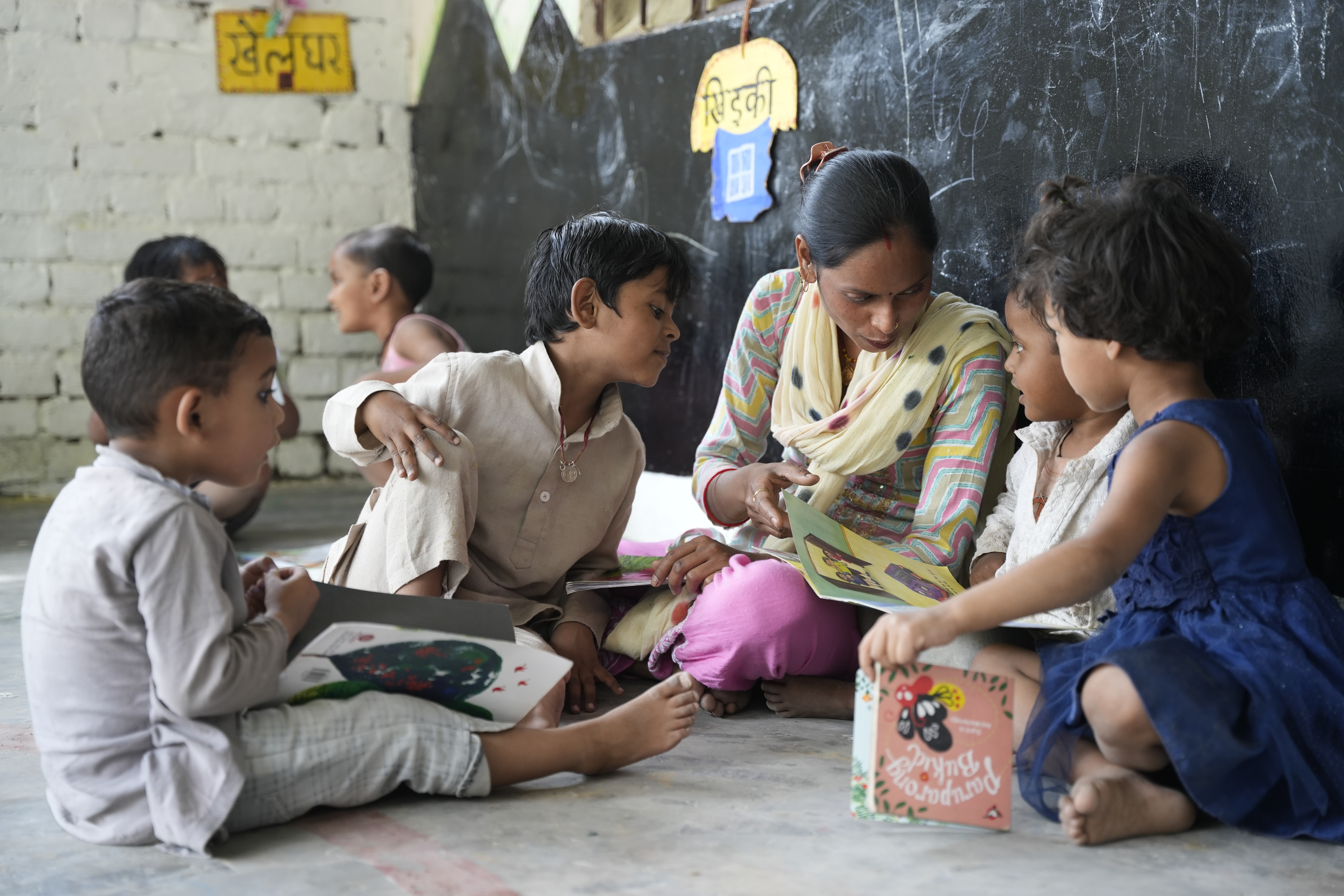
In Classrooms
Children who are more willing to ask questions, try things out and learn from one another. Environments that feel safer, more encouraging and more alive with inquiry.
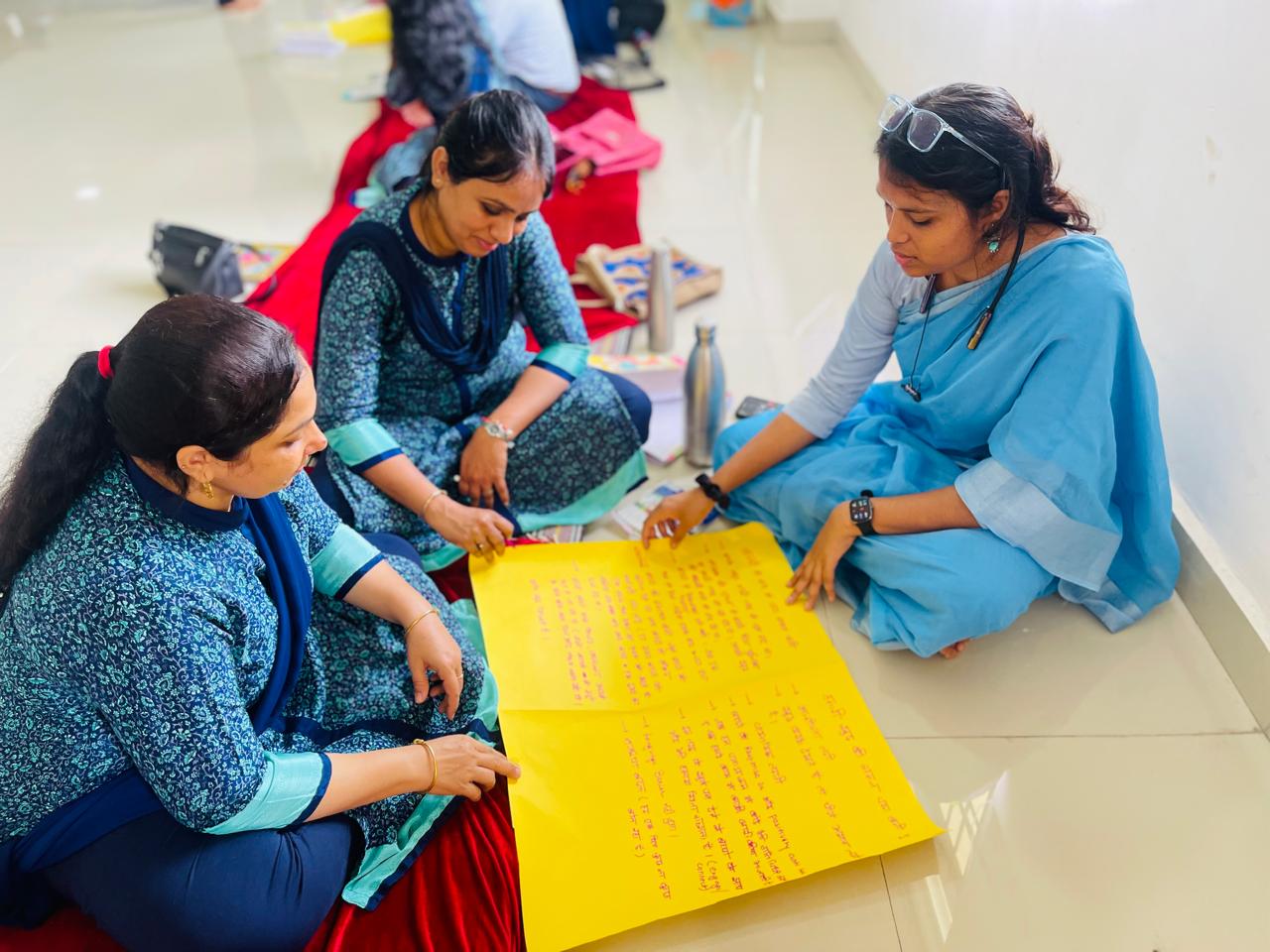
Among Educators
Teachers and frontline workers who see their role differently — as people with a mission, not just tasks. Practitioners who reflect on their work and support each other.
In Institutions
Leaders who communicate a shared purpose rather than directives. Institutions where learning is discussed, not just monitored — where people at different levels feel invested in a common goal.
What People Say
Voices from educators and programme participants across our work.
Learning with Meaning
One thing that I learnt throughout these weeks and which I will never forget is that you may assume that a child has some learning disability or personality disorder but all that the child ever needed could be just some attention and a lot of love. Your love can give him so much confidence that he may start believing himself all over again.
Nisha Thomas
BRP, DNHDD — Learning with Meaning
Learning with Meaning
I used to believe that learning happened only through textbooks. Now I have realized that learning becomes far more engaging and meaningful when children are encouraged to talk, ask questions, and learn together.
Keyur Singh Gohil
BRP, DNHDD — Learning with Meaning
Learning with Meaning
After changing the seating arrangement, I noticed that all the students in the classroom began participating more enthusiastically. It made me realize that the distinction between front-bench and back-bench students had disappeared. Instead, there was a sense of unity — everyone felt included and equal. Making the classroom more interactive has changed my beliefs: no child is weak — every student has some unique talent or strength.
Nirupa Vadhiya
BRP, DNHDD — Learning with Meaning
Learning with Meaning
Teaching in the classroom is not just about explaining content; it's equally about understanding students' emotions and guiding them accordingly. I believed that teaching was limited to delivering content in a structured manner. However, interacting with students made me realize that teaching is more about understanding the emotional and behavioural needs of children and responding to them with love, care and patience.
Denish Solanki
BRP, Diu — Learning with Meaning
Learning with Meaning
Earlier, our teaching was largely knowledge-based, with limited use of activities. This new approach has transformed the way we teach. It encourages us to constantly explore and design innovative learning experiences for children, making us not just teachers, but lifelong learners and explorers.
Ambrish
BRP, Silvassa — Learning with Meaning
Leadership for Nurturing Care
मेरे में यह बदलाव आया कि मैं पहले बच्चों पर बहुत गुस्सा करता था लेकिन अब मैं प्रेम भावना से बच्चों से बात करने लगा। रोक टोक बंद कर दिया।
मिंगल गवली
Margdarshak — Leadership for Nurturing Care
Leadership for Nurturing Care
Regular community visits have transformed our relationship with families. We now connect not only with parents of absent students but also with those whose children attend regularly, expressing our gratitude for their support. This has strengthened trust, created a sense of belonging, and built caring relationships that have brought the community closer to the school.
Vaishali Ghavate
Margdarshak, Khanvel — Leadership for Nurturing Care
Leadership for Nurturing Care
Through continuous training, I experienced meaningful personal growth. I began applying my learning at home with my own children and saw positive changes in our relationship. This transformation gave me confidence that these practices can create a lasting impact not only within families but also across the wider community.
Anita Mahal
Margdarshak, Khanvel, DNHDD — Leadership for Nurturing Care
Leadership for Nurturing Care
A significant change in my teaching has been moving from simply instructing children to truly understanding them. In our preschool, we create a safe, caring, and nurturing environment that responds to each child's needs. The children feel so comfortable and loved that learning feels like a natural extension of home. The warmth and affection they receive from their teachers make learning more joyful and meaningful.
Sanjay Davariya
Margdarshak, Khanvel, DNHDD — Leadership for Nurturing Care
Leadership for Nurturing Care
When I entered the classroom, I saw the children ready and engaged, reading their name cards. As soon as I picked up a card, one child immediately recognised their name and proudly identified it. The child then held my hand and invited me to sit beside them. This small moment reflected both the child's growing confidence in name recognition and the strong sense of trust and connection in the classroom.
Teacher, Grade 1 & 2
DNHDD — Leadership for Nurturing Care
Leadership for Nurturing Care
Earlier, I felt that implementing this approach in Grades 1 and 2 might lead to learning loss for children. However, in the second cycle, I can clearly see the positive changes that have taken place after the first cycle. I also realised that we often focus heavily on teaching letters, but phonological awareness and sounds are equally important — if not more important — before children learn letters. This was a new learning for me and has changed the way I think about early literacy.
Teacher, Grade 1 & 2
DNHDD — Leadership for Nurturing Care
Leadership for Nurturing Care
फील्ड में आंगनवाड़ी के बच्चों के साथ समय बिताने पर महसूस हुआ कि हमारे पद की सबसे बड़ी महत्ता बच्चों के उज्ज्वल भविष्य को आकार देने में है।
सारिका वैष्णव
सुपरवाइजर, राजनांदगांव — Leadership for Nurturing Care
Leadership for Nurturing Care
जब अधिकारी केवल निरीक्षण नहीं, बल्कि बच्चों के साथ समय बिताकर उनके सीखने, खेलने और मुस्कुराने की दुनिया को समझते हैं, तभी अपने पद की वास्तविक महत्ता का अनुभव होता है।
रीना ठाकुर
सीडीपीओ, कबीरधाम — Leadership for Nurturing Care
Leadership for Nurturing Care
इस पूरे कार्यक्रम की सबसे बड़ी सीख मेरे लिए यह रही कि जब हम एक-दूसरे को सुनते हैं, समझते हैं और सहयोगी भाव से साथ काम करते हैं, तब कार्य केवल दायित्व नहीं रह जाता, बल्कि एक साझा प्रयास बन जाता है। इसी आत्मीयता और विश्वास ने मेरे सहकर्मियों के साथ गहरे और सार्थक संबंध बनाए हैं। इन संबंधों ने न केवल मेरे व्यक्तिगत विकास में योगदान दिया है, बल्कि बच्चों और परिवारों के हित में किए जाने वाले कार्यों को भी अधिक संवेदनशील, प्रभावी और गहराईपूर्ण बनाया है। यही इस कार्यक्रम की सबसे मूल्यवान उपलब्धि है।
दीपा शाह
जिला महिला एवं बाल विकास अधिकारी, राजनांदगांव — Leadership for Nurturing Care
Leadership for Nurturing Care
जब संवाद में आत्मीयता, सम्मान और खुलापन आया, तब टीम के सदस्यों ने अपने अनुभव, चुनौतियाँ और नवाचार अधिक सहजता से साझा किए। इससे समस्याओं के समाधान सामूहिक रूप से निकलने लगे और कार्यों के प्रति स्वामित्व की भावना भी बढ़ी। परिणामस्वरूप टीम का समन्वय बेहतर हुआ, कार्यों की गुणवत्ता में सुधार आया और बच्चों एवं परिवारों तक कार्यक्रमों का प्रभाव अधिक प्रभावी ढंग से पहुँच सका।
अमित सिन्हा
जिला कार्यक्रम अधिकारी, गौरेला पेंड्रा मरवाही — Leadership for Nurturing Care
Leadership for Nurturing Care
परिपोषक पालन कार्यक्रम ने मुझे यह समझने का अवसर दिया कि प्रभावी नेतृत्व केवल निर्देश देने से नहीं, बल्कि सहकर्मियों के साथ विश्वास और सहयोग का संबंध बनाने से विकसित होता है। इस कार्यक्रम के माध्यम से मैंने अपने सहकर्मियों के साथ सखा भाव से जुड़ना सीखा — अर्थात आंगनवाड़ी कार्यकर्ता दीदी को केवल अधीनस्थ या सहयोगी के रूप में नहीं, बल्कि समान उद्देश्य के साथी के रूप में देखना।
बिंदु सिंह
सुपरवाइजर, बिलासपुर — Leadership for Nurturing Care
Leadership for Nurturing Care
रचनात्मकता के सत्रों ने मेरी बीमारी के कठिन समय में मुझे मानसिक शक्ति और सकारात्मकता दी। मैंने अपने भावों को कविता और गीतों के माध्यम से व्यक्त किया, जो मेरे लिए औषधि की तरह साबित हुए। रचनात्मक अभिव्यक्ति ने मुझे आशा, साहस और आत्मविश्वास दिया, जिससे मैं बीमारी से संघर्ष कर उसे हराने में सफल रही।
कीर्ति नोर्गे
सुपरवाइज़र, बिलासपुर — Leadership for Nurturing Care
Learning with Meaning
One thing that I learnt throughout these weeks and which I will never forget is that you may assume that a child has some learning disability or personality disorder but all that the child ever needed could be just some attention and a lot of love. Your love can give him so much confidence that he may start believing himself all over again.
Nisha Thomas
BRP, DNHDD — Learning with Meaning
Learning with Meaning
I used to believe that learning happened only through textbooks. Now I have realized that learning becomes far more engaging and meaningful when children are encouraged to talk, ask questions, and learn together.
Keyur Singh Gohil
BRP, DNHDD — Learning with Meaning
Learning with Meaning
After changing the seating arrangement, I noticed that all the students in the classroom began participating more enthusiastically. It made me realize that the distinction between front-bench and back-bench students had disappeared. Instead, there was a sense of unity — everyone felt included and equal. Making the classroom more interactive has changed my beliefs: no child is weak — every student has some unique talent or strength.
Nirupa Vadhiya
BRP, DNHDD — Learning with Meaning
Learning with Meaning
Teaching in the classroom is not just about explaining content; it's equally about understanding students' emotions and guiding them accordingly. I believed that teaching was limited to delivering content in a structured manner. However, interacting with students made me realize that teaching is more about understanding the emotional and behavioural needs of children and responding to them with love, care and patience.
Denish Solanki
BRP, Diu — Learning with Meaning
Learning with Meaning
Earlier, our teaching was largely knowledge-based, with limited use of activities. This new approach has transformed the way we teach. It encourages us to constantly explore and design innovative learning experiences for children, making us not just teachers, but lifelong learners and explorers.
Ambrish
BRP, Silvassa — Learning with Meaning
Leadership for Nurturing Care
मेरे में यह बदलाव आया कि मैं पहले बच्चों पर बहुत गुस्सा करता था लेकिन अब मैं प्रेम भावना से बच्चों से बात करने लगा। रोक टोक बंद कर दिया।
मिंगल गवली
Margdarshak — Leadership for Nurturing Care
Leadership for Nurturing Care
Regular community visits have transformed our relationship with families. We now connect not only with parents of absent students but also with those whose children attend regularly, expressing our gratitude for their support. This has strengthened trust, created a sense of belonging, and built caring relationships that have brought the community closer to the school.
Vaishali Ghavate
Margdarshak, Khanvel — Leadership for Nurturing Care
Leadership for Nurturing Care
Through continuous training, I experienced meaningful personal growth. I began applying my learning at home with my own children and saw positive changes in our relationship. This transformation gave me confidence that these practices can create a lasting impact not only within families but also across the wider community.
Anita Mahal
Margdarshak, Khanvel, DNHDD — Leadership for Nurturing Care
Leadership for Nurturing Care
A significant change in my teaching has been moving from simply instructing children to truly understanding them. In our preschool, we create a safe, caring, and nurturing environment that responds to each child's needs. The children feel so comfortable and loved that learning feels like a natural extension of home. The warmth and affection they receive from their teachers make learning more joyful and meaningful.
Sanjay Davariya
Margdarshak, Khanvel, DNHDD — Leadership for Nurturing Care
Leadership for Nurturing Care
When I entered the classroom, I saw the children ready and engaged, reading their name cards. As soon as I picked up a card, one child immediately recognised their name and proudly identified it. The child then held my hand and invited me to sit beside them. This small moment reflected both the child's growing confidence in name recognition and the strong sense of trust and connection in the classroom.
Teacher, Grade 1 & 2
DNHDD — Leadership for Nurturing Care
Leadership for Nurturing Care
Earlier, I felt that implementing this approach in Grades 1 and 2 might lead to learning loss for children. However, in the second cycle, I can clearly see the positive changes that have taken place after the first cycle. I also realised that we often focus heavily on teaching letters, but phonological awareness and sounds are equally important — if not more important — before children learn letters. This was a new learning for me and has changed the way I think about early literacy.
Teacher, Grade 1 & 2
DNHDD — Leadership for Nurturing Care
Leadership for Nurturing Care
फील्ड में आंगनवाड़ी के बच्चों के साथ समय बिताने पर महसूस हुआ कि हमारे पद की सबसे बड़ी महत्ता बच्चों के उज्ज्वल भविष्य को आकार देने में है।
सारिका वैष्णव
सुपरवाइजर, राजनांदगांव — Leadership for Nurturing Care
Leadership for Nurturing Care
जब अधिकारी केवल निरीक्षण नहीं, बल्कि बच्चों के साथ समय बिताकर उनके सीखने, खेलने और मुस्कुराने की दुनिया को समझते हैं, तभी अपने पद की वास्तविक महत्ता का अनुभव होता है।
रीना ठाकुर
सीडीपीओ, कबीरधाम — Leadership for Nurturing Care
Leadership for Nurturing Care
इस पूरे कार्यक्रम की सबसे बड़ी सीख मेरे लिए यह रही कि जब हम एक-दूसरे को सुनते हैं, समझते हैं और सहयोगी भाव से साथ काम करते हैं, तब कार्य केवल दायित्व नहीं रह जाता, बल्कि एक साझा प्रयास बन जाता है। इसी आत्मीयता और विश्वास ने मेरे सहकर्मियों के साथ गहरे और सार्थक संबंध बनाए हैं। इन संबंधों ने न केवल मेरे व्यक्तिगत विकास में योगदान दिया है, बल्कि बच्चों और परिवारों के हित में किए जाने वाले कार्यों को भी अधिक संवेदनशील, प्रभावी और गहराईपूर्ण बनाया है। यही इस कार्यक्रम की सबसे मूल्यवान उपलब्धि है।
दीपा शाह
जिला महिला एवं बाल विकास अधिकारी, राजनांदगांव — Leadership for Nurturing Care
Leadership for Nurturing Care
जब संवाद में आत्मीयता, सम्मान और खुलापन आया, तब टीम के सदस्यों ने अपने अनुभव, चुनौतियाँ और नवाचार अधिक सहजता से साझा किए। इससे समस्याओं के समाधान सामूहिक रूप से निकलने लगे और कार्यों के प्रति स्वामित्व की भावना भी बढ़ी। परिणामस्वरूप टीम का समन्वय बेहतर हुआ, कार्यों की गुणवत्ता में सुधार आया और बच्चों एवं परिवारों तक कार्यक्रमों का प्रभाव अधिक प्रभावी ढंग से पहुँच सका।
अमित सिन्हा
जिला कार्यक्रम अधिकारी, गौरेला पेंड्रा मरवाही — Leadership for Nurturing Care
Leadership for Nurturing Care
परिपोषक पालन कार्यक्रम ने मुझे यह समझने का अवसर दिया कि प्रभावी नेतृत्व केवल निर्देश देने से नहीं, बल्कि सहकर्मियों के साथ विश्वास और सहयोग का संबंध बनाने से विकसित होता है। इस कार्यक्रम के माध्यम से मैंने अपने सहकर्मियों के साथ सखा भाव से जुड़ना सीखा — अर्थात आंगनवाड़ी कार्यकर्ता दीदी को केवल अधीनस्थ या सहयोगी के रूप में नहीं, बल्कि समान उद्देश्य के साथी के रूप में देखना।
बिंदु सिंह
सुपरवाइजर, बिलासपुर — Leadership for Nurturing Care
Leadership for Nurturing Care
रचनात्मकता के सत्रों ने मेरी बीमारी के कठिन समय में मुझे मानसिक शक्ति और सकारात्मकता दी। मैंने अपने भावों को कविता और गीतों के माध्यम से व्यक्त किया, जो मेरे लिए औषधि की तरह साबित हुए। रचनात्मक अभिव्यक्ति ने मुझे आशा, साहस और आत्मविश्वास दिया, जिससे मैं बीमारी से संघर्ष कर उसे हराने में सफल रही।
कीर्ति नोर्गे
सुपरवाइज़र, बिलासपुर — Leadership for Nurturing Care
What Numbers Say
Typical changes observed across our programmes.
Cognitive Development
AWW conducts Cognitive Development activities
AWW asks a variety of questions
AWW allows enough time for answers
AWW praises children for effort even when they make a mistake
AWW provides hints to children rather than answers
AWW actively includes every child
Creative Development
AWW conducts Creative Development activities
AWW praises children who do creative development activities
AWW asks questions about the creative artefacts
Free Play
AWW sets up materials for Free Play
Display of Child-made Artefacts
Artefacts made by children are on display
The artefacts display diversity
Physical Development
AWW conducts Physical Development activities
AWW includes every child in the activities
Pre-literacy Skills
AWW uses name cards to help children identify script
Pictures of common things are put up in AWC along with their names
Storytelling
AWW tells stories to the children
AWW emotes while telling stories
AWW tells one story in children's home language
Disciplining Strategies
AWW uses insulting language with children
AWW physically hits children
Cognitive Development
AWW conducts Cognitive Development activities
AWW asks a variety of questions
AWW allows enough time for answers
AWW praises children for effort even when they make a mistake
AWW provides hints to children rather than answers
AWW actively includes every child
Creative Development
AWW conducts Creative Development activities
AWW praises children who do creative development activities
AWW asks questions about the creative artefacts
Free Play
AWW sets up materials for Free Play
Display of Child-made Artefacts
Artefacts made by children are on display
The artefacts display diversity
Physical Development
AWW conducts Physical Development activities
AWW includes every child in the activities
Pre-literacy Skills
AWW uses name cards to help children identify script
Pictures of common things are put up in AWC along with their names
Storytelling
AWW tells stories to the children
AWW emotes while telling stories
AWW tells one story in children's home language
Disciplining Strategies
AWW uses insulting language with children
AWW physically hits children
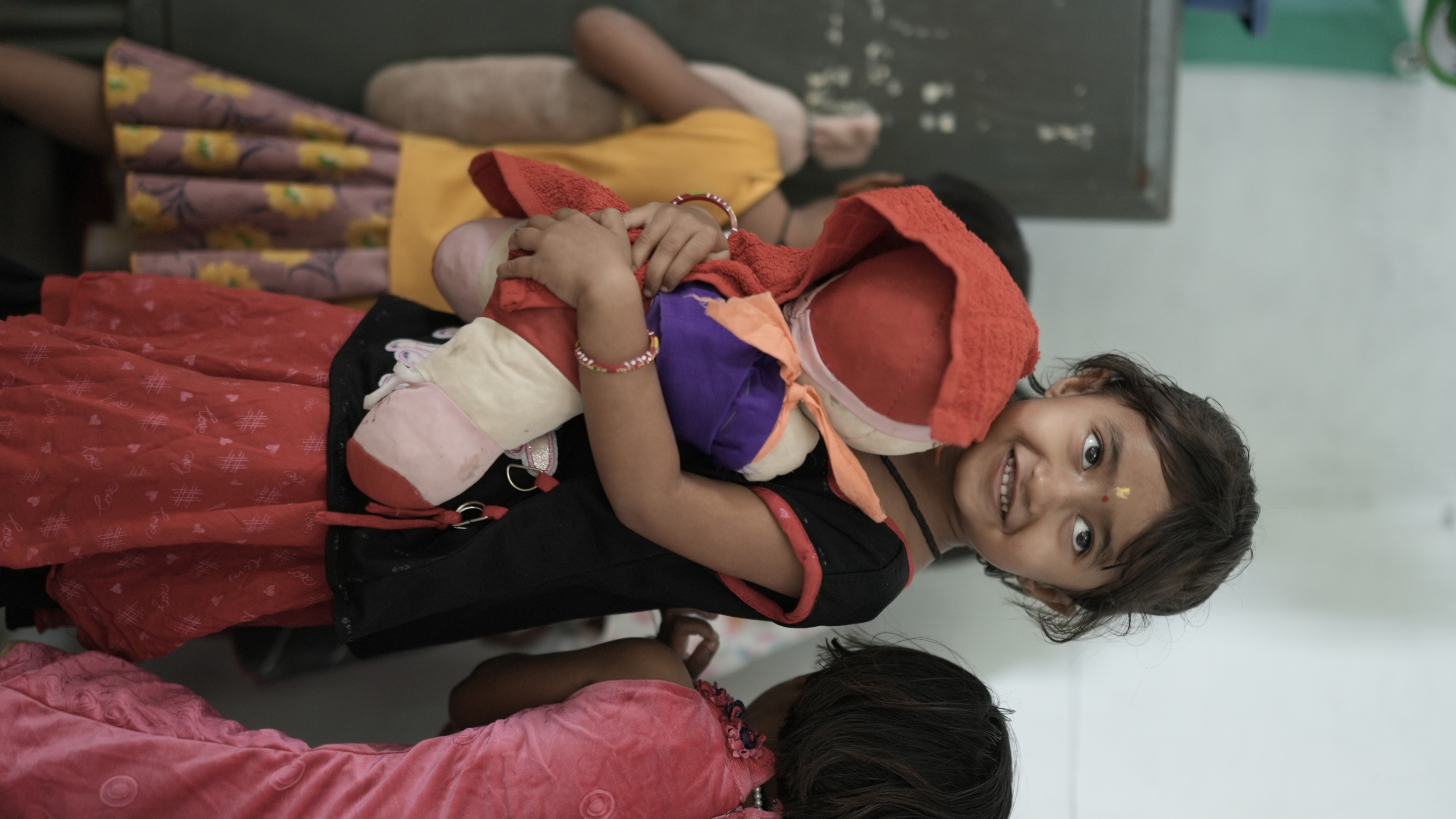
“What we can do is notice the changes and use them to educate ourselves about the relationship of our work with the communities we serve.”
Read Essays from Our Team →