How We Do It
Capacity-building for Building Capacity — क्षमता-वर्धक क्षमता वर्धन
Capacity-building for Building Capacity
C-BBC
Our aim is to help create an environment in public education systems that integrates child development and pedagogical skills, implementation skills, effective relationships, and personal growth at all levels of the organisation.
Given the scale of public systems, preparing the front-line workers to deliver on their mandate, and the senior officers to provide the container that fosters their work, requires continuous capacity-building that permeates the entire organisation. Decades of trainings at the front-end alone have failed to improve the outcomes of these systems because ignoring the capacity-building needs of the more senior officers fails to create the organisational environment that effective change requires.
Capacity-building in large-scale public systems, therefore, requires a commitment to building the necessary internal capacities to build organisational capacities — there aren't enough external experts to do so in any reasonable time frame. Moreover, it is hugely motivating for the trainers to remain available for support as learners struggle with the implementation challenges and participate in the celebrations as learners achieve milestones — external experts are usually unavailable for this.
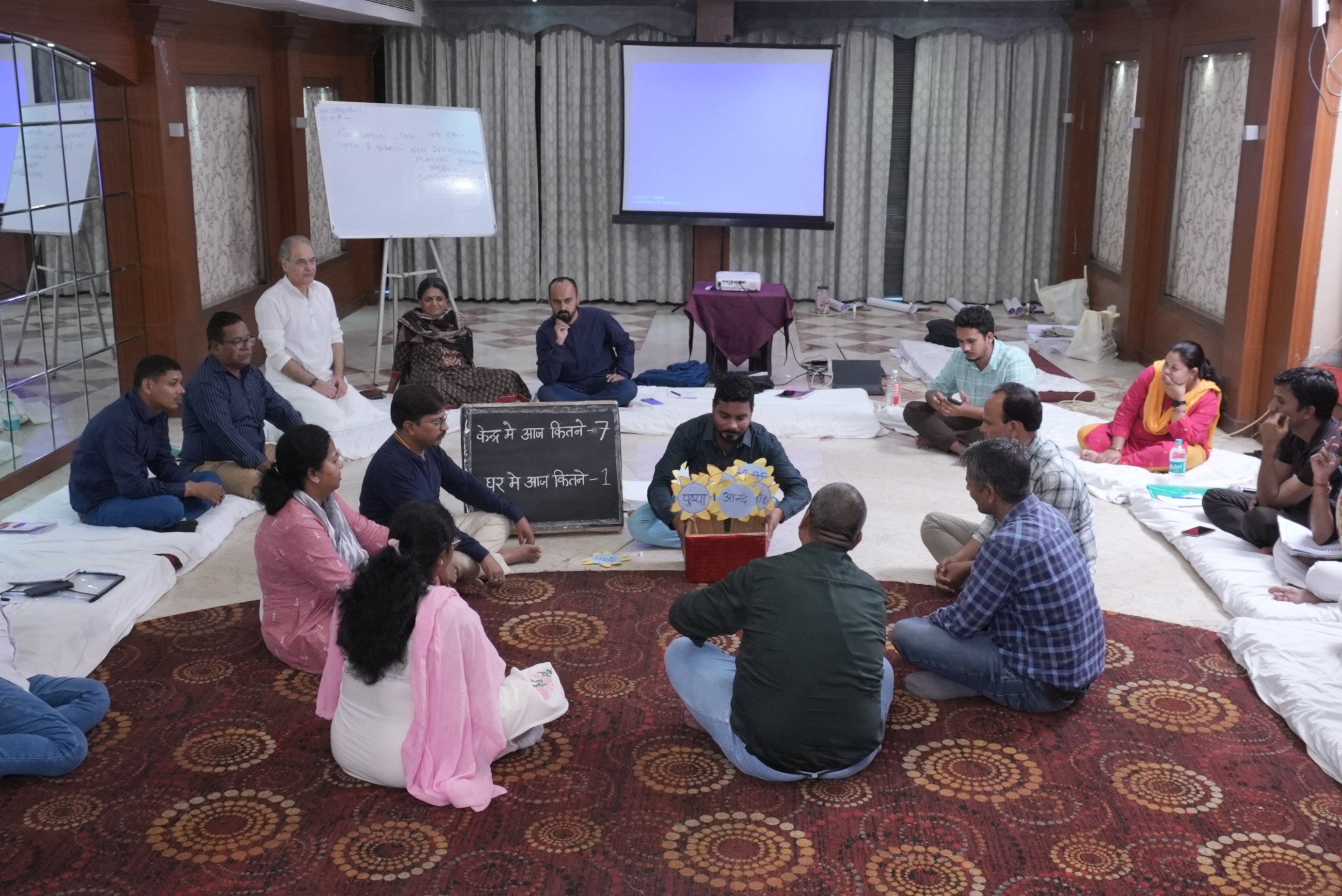
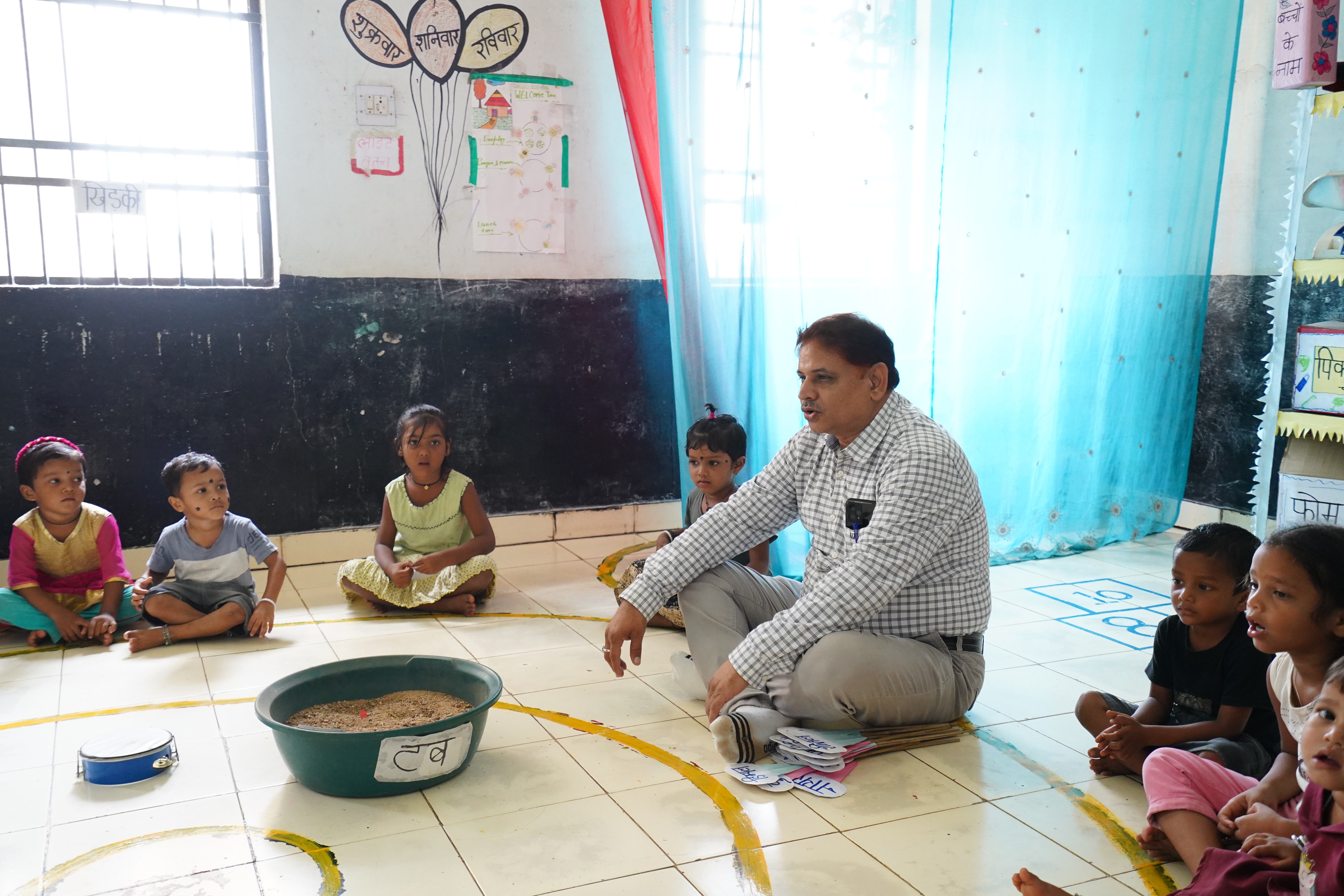
C-BBC is an approach that:
- —Helps build leaders infused with the personal mastery necessary for inspiring desirable change.
- —Equips them with the personal, technical, institutional and community leadership capacities to create an environment conducive to the change.
- —Ensures clarities of their roles so that they can be effective change agents.
C-BBC also acknowledges that, for change to sustain, such leaders:
- —Must see the relevance of their roles in a long-term perspective.
- —Must recognise the criticality of, and be equipped with the capacity to, develop their colleagues into leaders with similar capacities.
- —Must be developed, through this recognition, at all levels of the organisation.
To build such a container within a public system, C-BBC uses three key distinct and mutually reinforcing themes to build the necessary institutional spaces and capacities. Working through the interaction of these themes, the participants explore how to inspire the people that constitute their system, how to create and maintain an environment which will sustain it and what organisational processes will foster its adoption across organisational hierarchies. These three themes are …
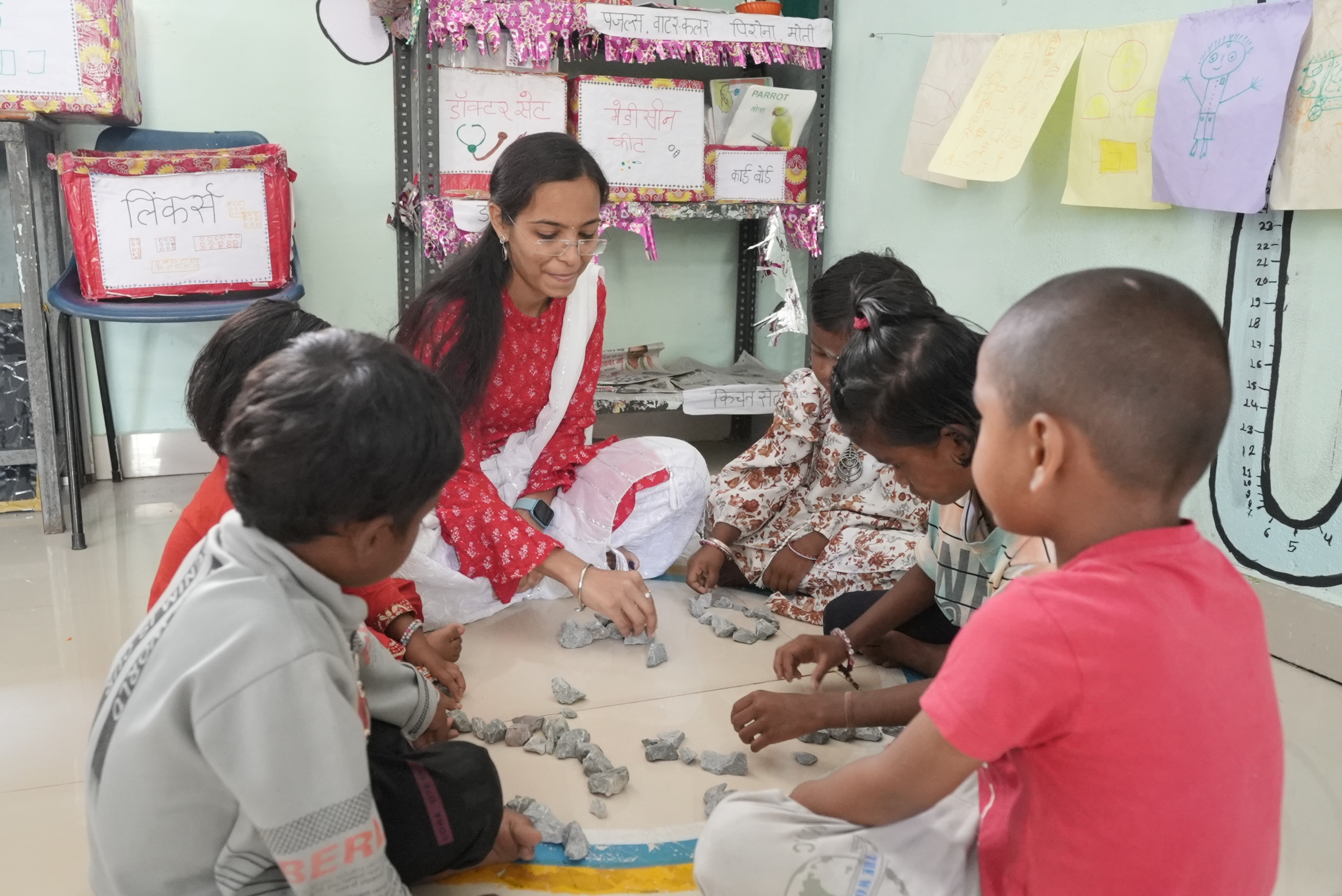
सकल · SAKAL
Sakal — सकल — is a beautiful Sanskrit word signifying wholeness and integrity. We use it as an acronym for three qualities we believe make a person and an organisation whole: Swayatva — स्वायत्व (Agency), Kaushalya — कौशल्य (Skilfulness) and Lakshya — लक्ष्य (Calling). Together, they form a virtuous cycle in which each element enhances the others. Our programmes help participants cultivate all three.
- लक्ष्य
Calling
Discover the value and deeper meaning of their role. Participants identify their personal calling (लक्ष्य) and align it with the larger organisational purpose, so that their daily actions become more coherent, intentional and powerful — moving in a direction that matters to them and to the institution.
- कौशल्य
Skilfulness
Develop the quiet confidence that comes from capacity — the recognition that they already possess, and can continue to grow, the skills (कौशल्य) needed to progress towards their calling. This spans personal, technical, institutional and community-oriented capabilities.
- स्वायत्व
Agency
Feel genuinely agentic (स्वायत्व). Participants discover ways of empowering themselves and fostering agency in their colleagues, so the whole team feels ready to explore, innovate and engage with the unknown — making both individuals and the organisation more resilient.
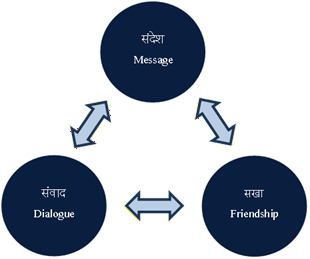
संबन्ध. Sambandh
As Sakal helps participants clarify the directions in which they wish to grow, they engage with the questions of how, as leaders, they can create the internal environment in which colleagues feel invited to learn, contribute and change. Our programmes equip them with three interwoven capacities:
- संदेश
The Message
Participants learn what kinds of messages (संदेश) their learner colleagues are more likely to truly hear — messages that are acknowledged, accepted and ultimately adopted. They discover how tone, timing and framing shape whether an idea takes root or quietly slips away.
- सखा
Friendship
They learn to offer themselves as friends (सखा) to their learner colleagues — present to celebrate successes, candid in offering feedback that sharpens effectiveness, and steady as a reliable support through moments of triumph and setback alike.
- संवाद
Dialogue
Above all, they learn to do this by holding a safe space in which innovation can thrive — where lived experiences are honoured, opinions are examined without defensiveness, and a shared understanding is built patiently through genuine dialogue (संवाद).
त्रिगुण । Triple Hat
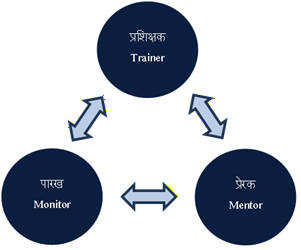
Triple Hat Leadership is a cascading capacity-building approach in which leaders at every organisational level take on three roles toward their direct reports: Trainer — प्रशिक्षक, Mentor — प्रेरक and Monitor — पारख.
Combining the three roles in service of building the capacity of one's colleagues is the essence of leadership.
- प्रशिक्षक
Trainer
As trainer, they undertake to master not only what they ask their colleagues to know, but also how to communicate it to them so that the learners can find meaning in it. They learn to listen, to observe and to connect with the learners, so that learning can happen.
- प्रेरक
Mentor
As mentor, they are available for celebration in success and introspection in setbacks. They not only help their colleagues chart a more effective way forward, they also help as containers for their fears, anxieties and overwhelms that accompany any learning process.
- पारख
Monitor
As monitor, they exemplify support through supervision — they recognise that if the monitoring is not experienced as supportive, it will inevitably be experienced as punitive, leading to corrupted and meaningless data and faulty decision-making.
The Mindful Cascade
We call the developmental process that brings it all together The Mindful Cascade. It is designed to overcome the familiar shortcomings of large-scale cascade training, where material is transmitted mindlessly from level to level, promptly forgotten, and rarely implemented.
FCLL experts seed the process by training the top tier — building their training, monitoring and mentoring capacities, and co-creating detailed implementation plans. That tier then runs the same process with their juniors, and so on, until the cascade reaches frontline workers. It unfolds over several cycles of bite-sized material, so learning is absorbed and its implementation stays visible.
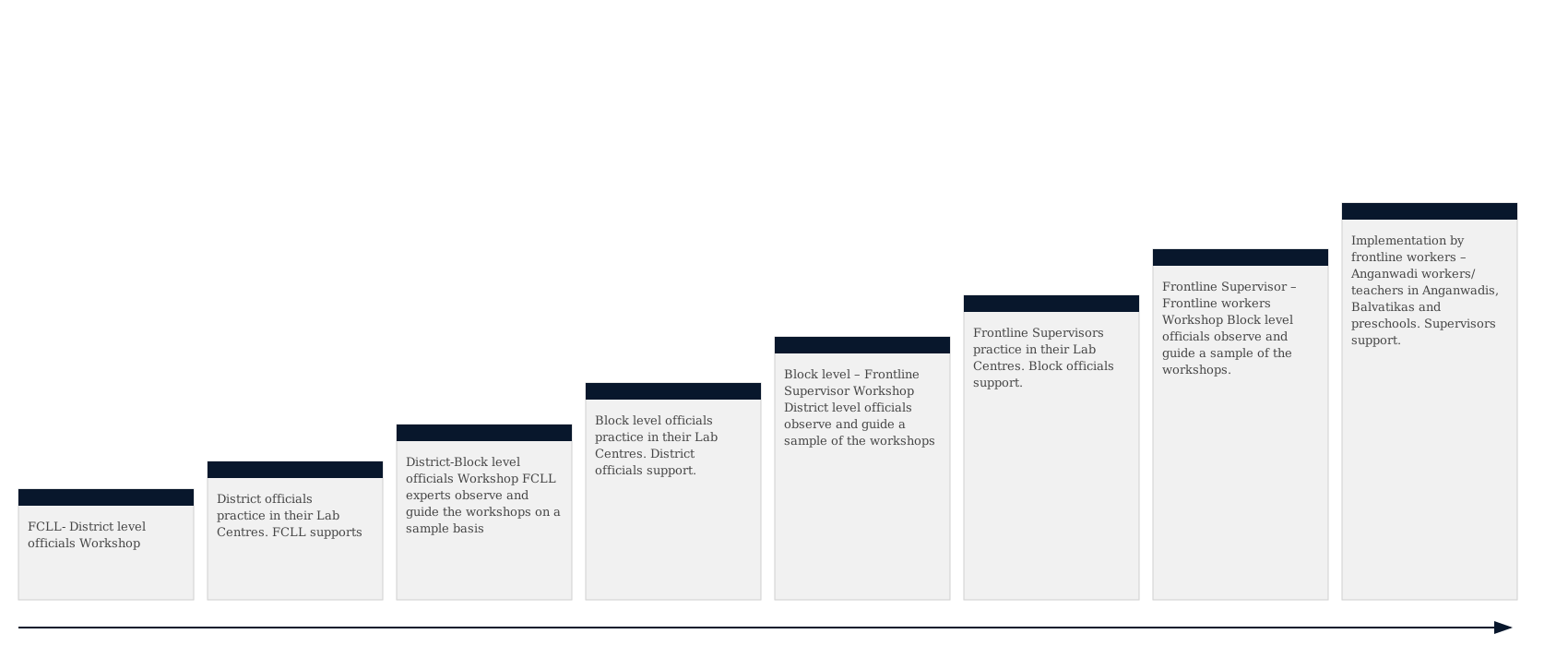
A few “rules” make the cascade mindful. After each training, a participant must practise and personally implement what they have learnt before teaching the next level — building both empathy and confidence. Trainers are observed on a sample basis by their own seniors, who offer feedback and, when needed, model the right behaviour. Implementation is reviewed periodically through dialogic Chaupals that create shared understanding of what is being done and how.
As a result, knowledge spreads rapidly, the whole department teaches and learns together, and the focus stays on implementation, not training.
Why C-BBC Works
Organisational Coherence
The approach seeks to align the entire organisational hierarchy — senior leaders, middle management and frontline staff — around the shared mission of children's care and learning. With the advent of the National Education Policy 2020, it is important that all levels develop a common understanding and can communicate it clearly within the system. As officers learn and teach one another across levels, the process builds confidence, trust and mutual respect across the hierarchy.
Leveraging Human Resources
A system-wide change is obviously essential for universal reach of an effective learning programme. However, external experts are exceedingly few in comparison to the requirement for direct capacity-building of even the front-line workers, much less those with more complex skills required for the more senior functionaries. C-BBC enables public systems to develop internal capacities to more effectively leverage their resources.
Financial Efficiency
The entire system for delivery already exists and is paid for from public funds. It is efficient to enhance its effectiveness, rather than setting up parallel systems of capacity-building. Also, our programmes are designed so that the programme activities fit seamlessly into departmental routines, making allocation of substantial additional training budgets unnecessary.